
Online Therapy for Anxiety
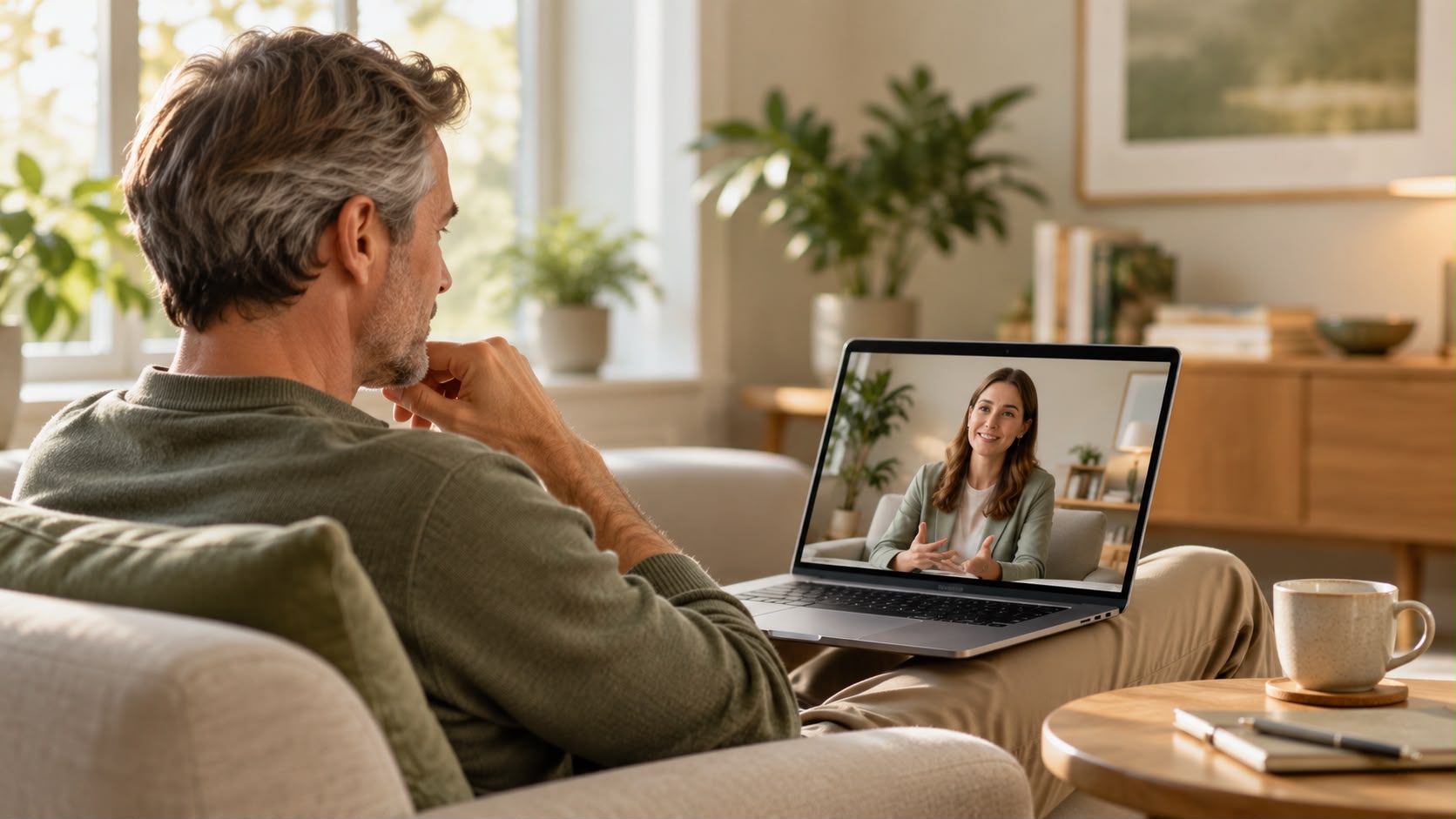
Anxiety can make everyday situations feel uncertain or overwhelming, even when there is no immediate danger. If worry, tension or fear is affecting your sleep, relationships or daily life, online therapy can offer space to understand what is happening and explore practical ways forward.
- Every profile checked by our team
- Secure online sessions
- Book in minutes
- No account needed
What is anxiety?
Anxiety is a common response to uncertainty or perceived threat. It may involve worry about what could happen, a sense of dread or physical changes such as a racing heart. Feeling anxious occasionally is part of life; persistent or difficult-to-control anxiety that interferes with everyday activities may warrant professional assessment. Anxiety is not one single diagnosis: generalised anxiety disorder (GAD), social anxiety disorder, panic disorder and phobias have different features and treatment recommendations.
Signs anxiety may be affecting you
- Worrying about several areas of life and finding it difficult to switch off
- Feeling restless, on edge or unusually irritable
- Trouble concentrating, sleeping or relaxing
- Muscle tension, nausea or a racing heart
- Avoiding situations because you fear what might happen
These symptoms can have causes other than anxiety. Speak to a GP about new, severe or unexplained physical symptoms.
What can contribute to anxiety?
Stressful events, uncertainty, past experiences, health concerns and patterns of thinking can all contribute. Sometimes anxiety continues after the original pressure has passed. Trying to eliminate every uncertainty, seeking repeated reassurance or avoiding feared situations may bring short-term relief while keeping worry going over time. This does not mean you have caused your anxiety.
How can therapy help with anxiety?
Therapy may help you recognise triggers, understand patterns of worry and avoidance, and develop ways of responding that fit your circumstances. Cognitive behavioural therapy (CBT) is an evidence-based option for several anxiety disorders, but the most suitable treatment depends on the specific difficulty and individual needs. For adults with GAD, NICE guideline CG113 includes CBT and applied relaxation among higher-intensity psychological interventions, alongside other treatment options.
A therapist might help you notice unhelpful predictions, practise tolerating uncertainty or plan manageable steps towards situations you have avoided. Treatment is collaborative; there is no guaranteed outcome or fixed number of sessions for everyone.
What happens in online anxiety therapy?
Early sessions usually explore what you experience, when anxiety is strongest and what you hope to change. For example, if you repeatedly check work emails for fear of making a mistake, you and your therapist might explore the worry behind the checking and agree a small experiment to test a different response. Your therapist should explain their approach and discuss whether it suits your needs.
Choosing a therapist for anxiety
On Veyro you can compare independent therapists who list anxiety among their areas of expertise. Look at training, therapeutic approach, availability and fees. If you are seeking a particular treatment such as CBT for GAD, ask whether the therapist has relevant training and experience; an anxiety specialism does not automatically establish expertise in every anxiety disorder.
Anxiety and related difficulties
Anxiety may overlap with social anxiety, panic attacks or health anxiety, but these are not interchangeable. If ongoing pressure is part of the picture, you may also find our stress therapy page helpful. If low mood or loss of interest is prominent, see our depression therapy page. For general information and support options, see the NHS overview of generalised anxiety disorder. If anxiety is significantly affecting your life, consider speaking to your GP as well as exploring therapy.
Clinically reviewed by Daniel Rosenberg, Senior Counsellor | ACCPH Member | General Hypnotherapy Register (GHR) Registrant on 4 November 2026.
Find therapists who can help with anxiety

Adam Ryan
Counsellor

Alan Brodie
Counsellor | Cognitive Behavioural Therapist (CBT)
Amanda Hodgson
BABCP Accredited Cognitive Behavioural Therapist

Amanda Stein
Adult and children’s integrative counsellor. EMDR practitioner

Amber Sexton
Adult and Children's Counsellor and Psychotherapist

Ana Moore
Psychotherapist
How Veyro works
- 1
Browse
Filter by what you need help with, price, gender, language and more.
- 2
Book
Pick a time that suits you and pay securely. No account needed.
- 3
Talk
Meet your therapist online from wherever you feel comfortable.
Frequently asked questions
Is anxiety the same as generalised anxiety disorder?
No. Anxiety is a normal human experience. Generalised anxiety disorder involves persistent, difficult-to-control worry across different areas of life and is assessed by a qualified healthcare professional.
Can online therapy help with anxiety?
Online therapy can provide structured support for understanding and managing anxiety. Suitability depends on your needs, the treatment offered and whether you can speak privately and safely.
What therapy does NICE recommend for generalised anxiety disorder?
For adults with GAD, NICE describes a stepped-care approach. Options include CBT-based self-help and, when appropriate, individual CBT or applied relaxation. See NICE guideline CG113 for the full recommendations.
Do I need an anxiety diagnosis to book?
No. You can seek support for worry or fear without a formal diagnosis. Your GP can discuss assessment if symptoms are persistent or significantly disruptive.
Will therapy stop me worrying completely?
Therapy does not promise to remove all worry. It may help you relate differently to uncertainty and reduce the impact anxiety has on everyday life.
How many anxiety therapy sessions will I need?
This varies with your goals, the type of anxiety, the therapeutic approach and your preferences. Ask a prospective therapist how they usually plan and review treatment.
Can anxiety cause physical symptoms?
Anxiety may be accompanied by a racing heart, tension, sweating or stomach discomfort. Physical symptoms are not always caused by anxiety; seek medical advice if they are new, severe or concerning.